

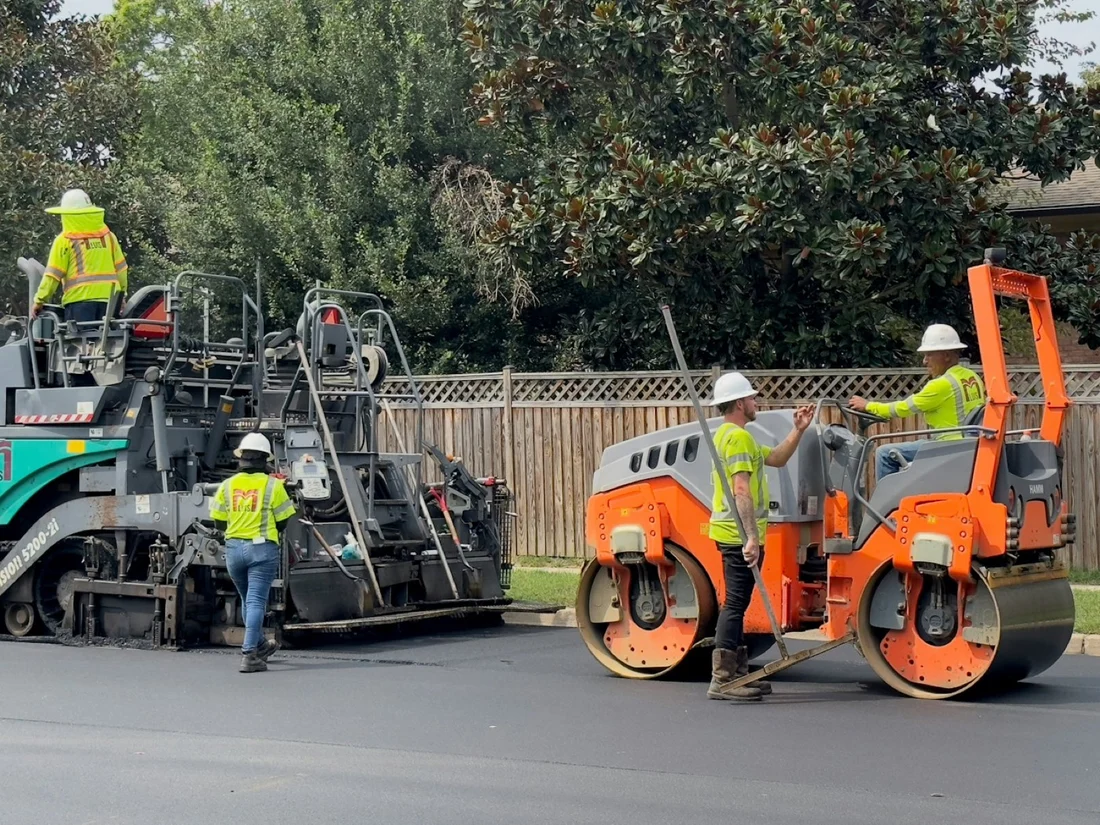
A chamber cover is only as good as the level it is set to. Fix it a few millimetres proud of the finished road and it hammers under every wheel and becomes a trip hazard; set it low and it ponds water and traps grit. The hard part is that the finished level is often not known when the chamber is built — the final wearing course goes down weeks later — so the question is how to set the cover once and have it land flush after the road is paved. That is the choice between a fixed frame and a telescopic one.
Why covers end up at the wrong level
On most jobs the chamber is built to a provisional level during the earthworks, traffic runs over a temporary surface, and the wearing course is laid last. Set a fixed frame to the provisional level and the final overlay buries it or leaves it proud; either way the gang comes back, breaks out the frame, re-beds it and reinstates the road around it. That re-lift is slow, it scars the new surface, and it is the single most common reason a cover sits badly a year after opening.
Fixed frames: set once, set right
A fixed frame is bedded to a single, known level and locked in with mortar or concrete. When the finished level is certain — a reconstruction where the full build-up is set, or a chamber tied to a kerb line — it is the simplest and most rigid choice, and under EN 124 D400 traffic a well-bedded fixed frame on a sound seating ring is what you want under a carriageway.
Its weakness is exactly the case above: it needs the final level in advance. Bed it early on a job where the surface is still moving and you have bought yourself a re-lift.
Telescopic and floating frames: set after the pave
A telescopic — or floating — frame separates the cover from the chamber. The frame sits on a sliding or self-levelling seating that takes up a range of height, so the chamber is built to a provisional level and the cover is set to the real surface after the wearing course is down. The paver can run over the blanked-out chamber, and the frame is brought up to the finished level in a short, clean operation that does not disturb the structure below.
That flexibility is the whole value: on resurfacing and overlay work, where the existing chambers must come up to a new level without rebuilding them, a telescopic frame turns a break-out job into an adjustment. The cost is a slightly more complex frame and a seating that must be bedded correctly, because a floating frame set on poor mortar moves under traffic just as a fixed one does.
| Situation | Use |
|---|---|
| Finished level known at build | Fixed frame, bedded to final level |
| Wearing course laid later | Telescopic frame, set after paving |
| Resurfacing existing chambers | Telescopic frame, raised to the new level |
| Kerb-line or structural tie-in | Fixed frame |
Bedding is what holds the level
Whichever frame you choose, the cover stays at its level only as long as its bedding does. Set frames on a high-strength bedding mortar rated for the traffic, not on a scoop of sand or a dry mix, and give it time to gain strength before the road is opened. Most covers that rock within a year do so because the bedding failed, not because the frame did. For a D400 carriageway, match the seating depth and the bedding product to the maker's instruction and the traffic class.
Clear opening, shape and locking
Size a frame by its clear opening, not by the cover's overall dimension — the clear opening is what a person and equipment actually pass through, and utilities usually set a minimum, with Ø600 common for an access chamber. Round covers cannot fall into a round opening, which is why they dominate on carriageways; square and rectangular covers suit gullies and large chambers where the opening has to match the structure below. On trafficked or sloping sites, specify an anti-rattle gasket so the cover sits quiet under wheels, and a hinge or lock so it stays in place and lifts safely.
Match the class to the traffic
The frame and cover carry the same EN 124 load class as the rest of the chamber top, and the class follows the location: D400 for a carriageway, C250 at the kerb line, B125 for a footway or car park. A telescopic frame does not change that — it changes how the cover reaches its level, not how much load it carries — so specify the class by where the cover sits and the frame type by how the level is set, and keep the two decisions separate.
What to write in the BOQ
Say which frame type, to what level, and on what bedding: “Ductile iron cover and frame, EN 124 D400, Ø600 clear opening, telescopic frame set to finished road level after wearing course, on high-strength bedding mortar.” Where the chambers are existing and being resurfaced, state that the frames are to be raised to the new level, not broken out and rebuilt — it changes the method and the price, and it is the whole reason to choose a telescopic frame in the first place.
GON supplies drainage, water, gas and road-infrastructure products to contractors, utilities and IFI-funded programmes across Georgia.