

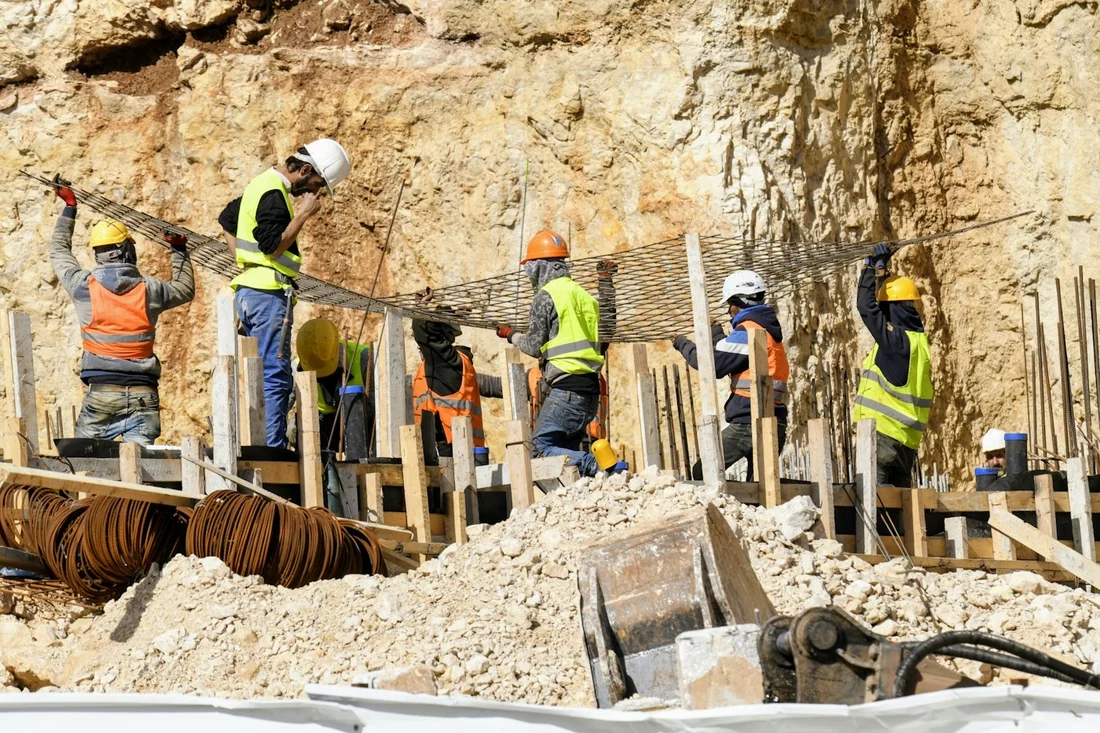
When a rural water programme reaches procurement, the pipe and the meter boxes look like the easy part of the bill of quantities. On the Dmanisi scheme — a World Bank-funded programme serving the town and nineteen surrounding villages — the supply was straightforward to name and harder to run: PE100 for the mains and the house connections, meter boxes at every new connection, delivered to scattered village sites in the order the civils crews needed them. This is what that took, and what the programme asked of procurement.
What the programme needed
A dispersed rural scheme is not one site; it is twenty. The mains follow the roads between villages, the connections branch to individual properties, and the crews move village by village rather than laying everything at once. The supply has to arrive the same way — matched to the section in hand, not tipped in one delivery at a central yard where it blocks access and ages in the sun. The materials were ordinary; the logistics were the job.
PE100, and why
The mains and connections were PE100 pressure pipe to EN 12201. PE suits a rural water network for the same reasons every utility reaches for it: it is corrosion-free, it comes in long coils for small diameters so a connection runs with few joints, and it joins by electrofusion or butt fusion into a leak-free line that tolerates ground movement. Pressure class was set by the duty — the SDR and PN chosen section by section — and the smaller connection sizes were supplied in coils to keep joints, and leak paths, to a minimum.
Meter boxes at every connection
Each new connection needed a meter box at the property boundary: a housing for the meter and stop tap that keeps them accessible for reading and maintenance, clear of the carriageway, and protected against frost and casual damage. On a programme measured in connections, the box is a high-count, repeatable item, and getting a consistent, compatible box across the whole scheme matters more than any single clever feature — a reader should meet the same box at every property.
Procurement on a World Bank job
A donor-funded programme carries documentation with every delivery: material certificates and test reports for the pipe, declarations of conformity, and a paper trail that matches what was delivered to what was specified and paid for. The supplier's part is to keep that documentation complete and to deliver in staged lots that follow the construction programme, so the contractor is never waiting on pipe nor storing months of it on an open site. Lead time and sequencing, not unit price alone, decide whether the civils programme holds.
What we delivered
GON supplied the PE100 pipe and the meter boxes for the Dmanisi programme — the pressure pipe for the mains and the house connections, and a meter box for each new connection — drawn down from stock in staged deliveries to the village sites as the crews reached them, with the material certificates the donor programme required. The shape of the contribution is the point: stocked materials delivered to a schedule, to dispersed sites, with the paperwork in order.
What it takes to supply a programme like this
A rural water scheme is won or lost on availability and sequencing as much as on specification. Holding PE100 and meter boxes in stock, delivering to site in the order the crews need, and keeping the certificates straight is what turns a bill of quantities into a working network. If you are planning a similar programme, send us the connection count and the construction sequence and we will build a delivery schedule around it.
GON supplies drainage, water, gas and road-infrastructure products to contractors, utilities and IFI-funded programmes across Georgia.